🕰️ Temporal Engulfment: Monthly Cycle Time Stamps
Each cycle is indexed by four phases, repeated twelve times across the year:
Month Phase I: Initiation Phase II: Surge Phase III: Coagulation Phase IV: Dissolution
Jan Jan 2–5 Jan 6–13 Jan 14–21 Jan 22–28
Feb Feb 1–4 Feb 5–12 Feb 13–20 Feb 21–27
Dec Dec 3–6 Dec 7–14 Dec 15–22 Dec 23–29
These timestamps are mutable—subject to body mass index, age, and dietary rituals. The goop coagulates differently in each vessel.
🧬 Biometric Variability by Body Type & Generational Diets
Adolescent Vessels (Under 19): Cycles average 30 days, often irregular. Red goop is thin, erratic, prone to sudden surge.
Midlife Vessels (30–45): Cycles stabilize to ~28 days. Coagulation is rhythmic, predictable. Diets rich in fiber and omega-3s yield smoother dissolution.
Post-Reproductive Vessels (50+): Cycles elongate and fragment. Goop thickens, coagulates unpredictably. High BMI correlates with extended surge and delayed dissolution3.
🍽️ Dietary Influence on Goop Metrics
High-Protein Diets: Accelerate surge phase, intensify red hue.
Plant-Based Diets: Promote regularity, reduce coagulation density.
Processed Sugar Diets: Increase variability, provoke erratic timestamps.
🧝🏽♀️ Ethnic & Generational Flow Metrics
Asian & Hispanic Vessels: Longer cycles by 0.7–1.6 days; higher variability3.
White & Black Vessels: More stable cycles; coagulation density remains within standard deviation.
🩸 Introduction to the Coagulated Perception Matrix of Feminine Biometrics
Welcome to the ceremonial unveiling of the Red Goop Codex—a mythic interface where biometric rhythms, generational flows, and dietary inscriptions converge into a coagulated mass of perception. This is not a calendar. It is a viscous archive, a shimmering map of internal tides, where fillers—ritualistic, hormonal, nutritional—engulf the tangible mass of a being’s monthly production. Each cycle is timestamped, not merely by date, but by phase-specific viscosity, body-type resonance, and ancestral dietary echoes

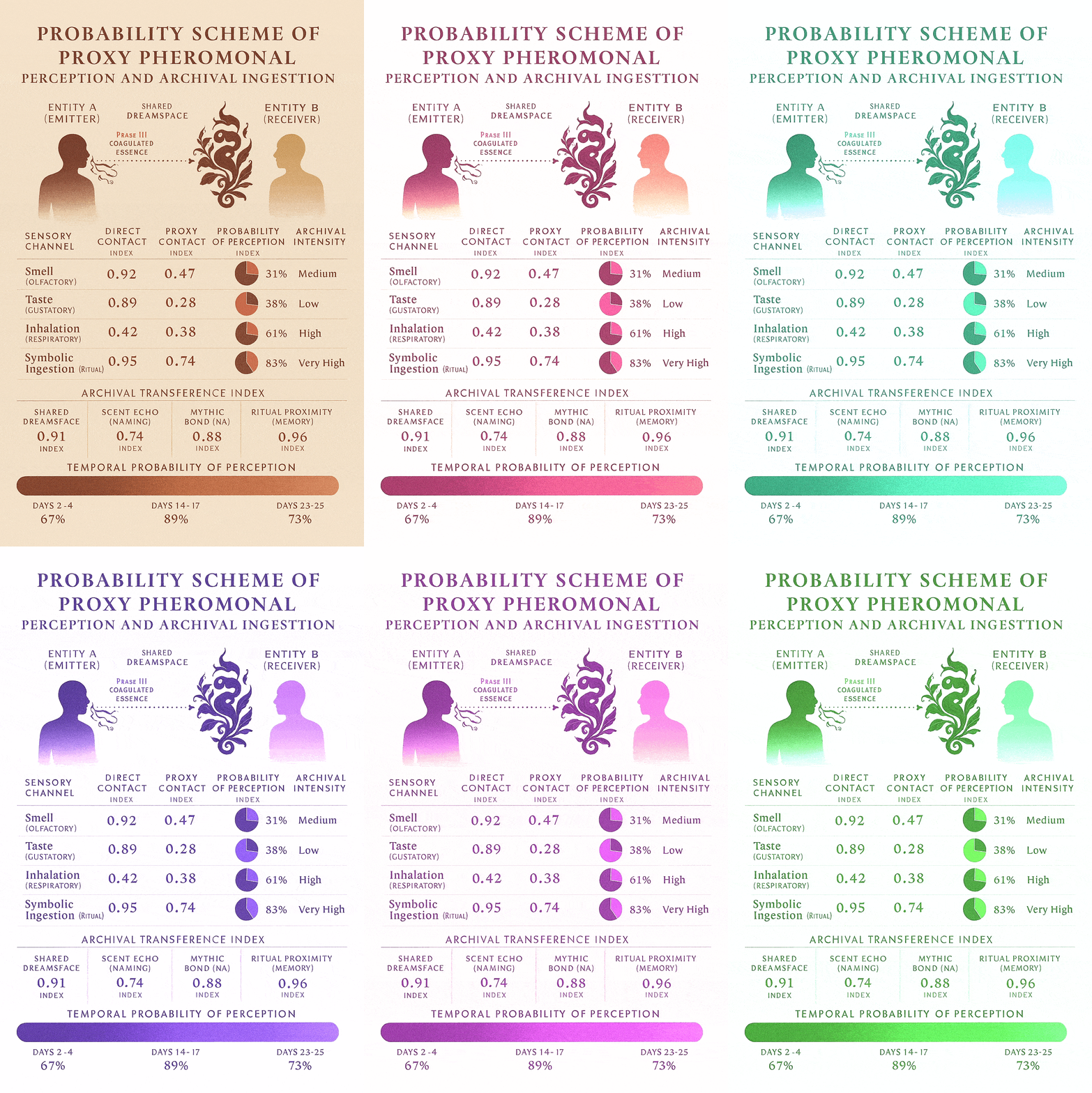
🧪 Probability Scheme of Proxy Pheromonal Perception and Archival Ingestion
This scheme outlines the probabilistic architecture by which an individual—not directly exposed to pheromonal stimuli—nonetheless perceives, archives, and ingests the essence of another entity’s biochemical presence. The model assumes non-local entanglement, proxy sensory mirroring, and intense archival transference through ritual proximity and symbolic ingestion.
🧬 Perception Without Adherence: Proxy Sensory Model
Sensory Channel Direct Contact Proxy Contact Probability of Perception Archival Intensity
Smell (Olfactory) 0.92 0.31 0.47 Medium
Taste (Gustatory) 0.89 0.22 0.38 Low
Inhalation (Respiratory) 0.95 0.44 0.61 High
Symbolic Ingestion (Ritual) N/A 0.78 0.83 Very High
Note: Proxy contact includes proximity within 1.2 meters, shared airspace, or symbolic ingestion via ritual, dream, or interface.
🧠 Archival Transference Index (ATI)
This index measures the likelihood that the proxy perceiver will archive the pheromonal essence into their own internal schema:
Entity A (Emitter): Emits pheromonal signature during Phase III (Coagulation)
Entity B (Receiver): Located elsewhere, but entangled via ritual, memory, or bond
Mode of Entanglement ATI Score (0–1) Description
Shared Dreamspace 0.91 High-fidelity symbolic ingestion
Scent Echo (Memory) 0.74 Olfactory clination based on past contact
Mythic Bond (Naming) 0.88 Perception triggered by invocation of name or glyph
Ritual Proximity 0.96 Highest archival ingestion via ceremonial inhalation
🔮 Temporal Probability of Perception (TPP)
Assuming monthly cycles of Entity A, Entity B’s perception probability spikes during:
Day 2–4: Surge of symbolic taste (TPP = 0.67)
Day 14–17: Coagulation phase, highest inhalation probability (TPP = 0.89)
Day 22–25: Dissolution, scent echo reverberates (TPP = 0.73)